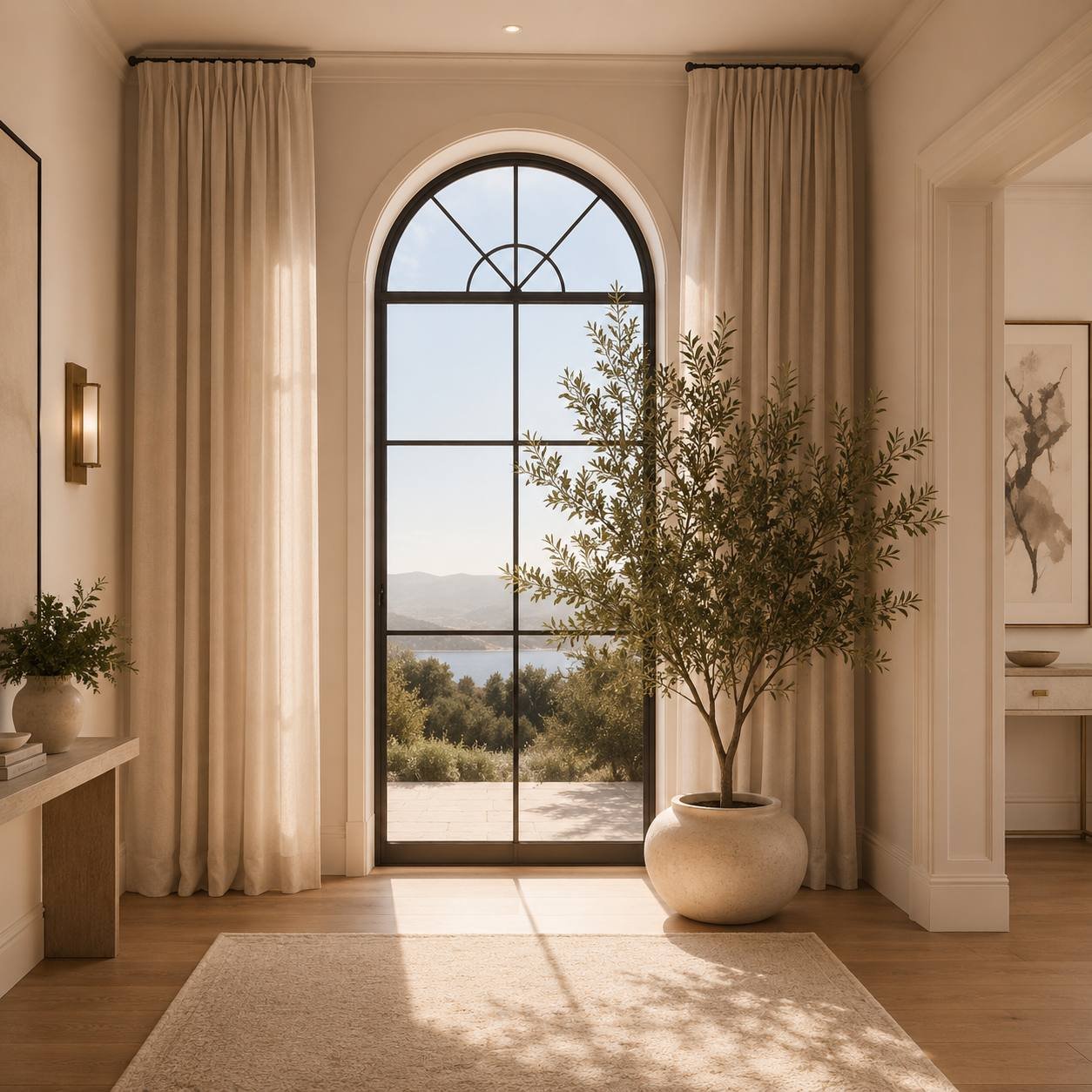
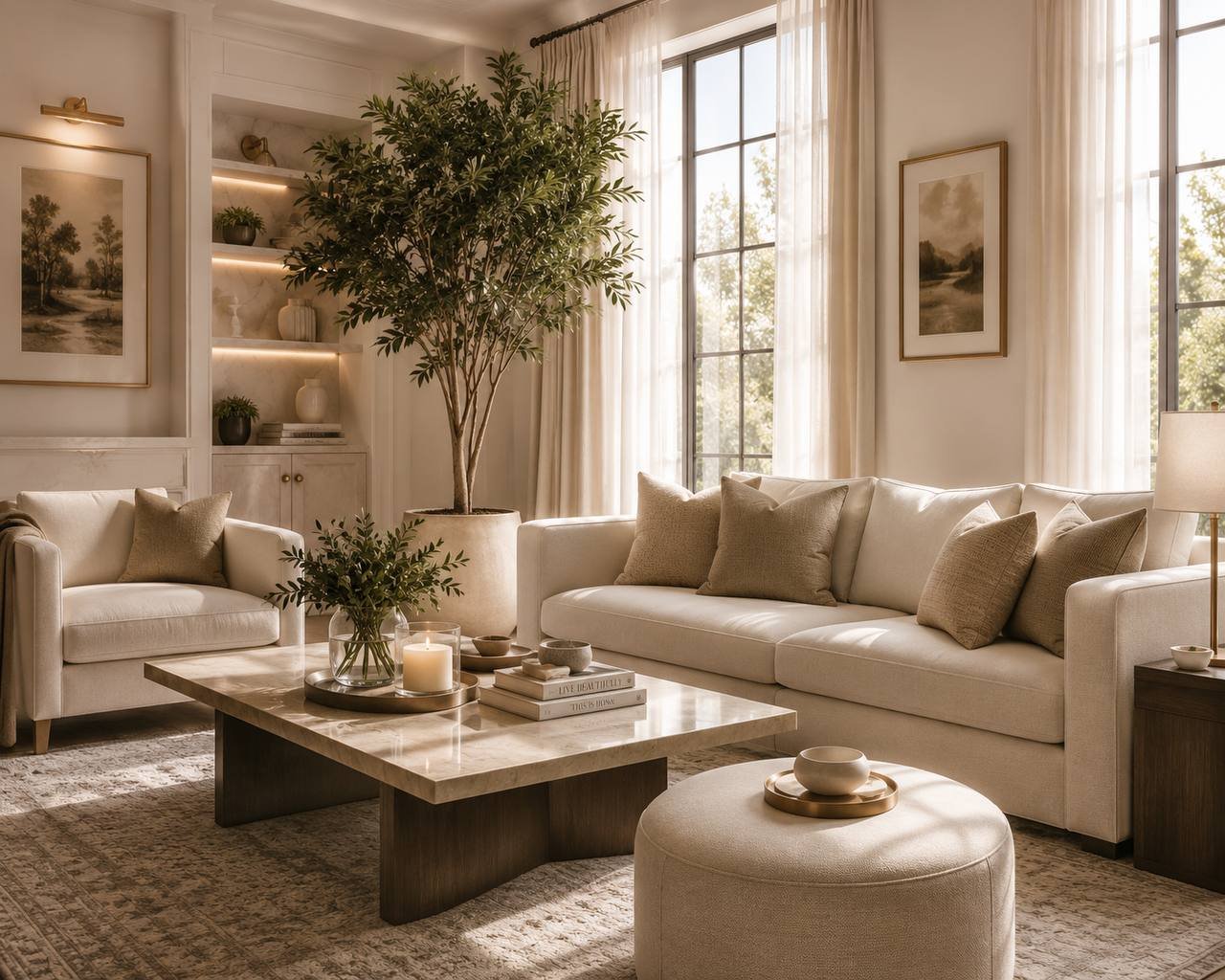
Design Tips for a Living RoomThat Feels at Peace
A calm living room is not decorated into existence — it is designed, one intentional choice at a time.
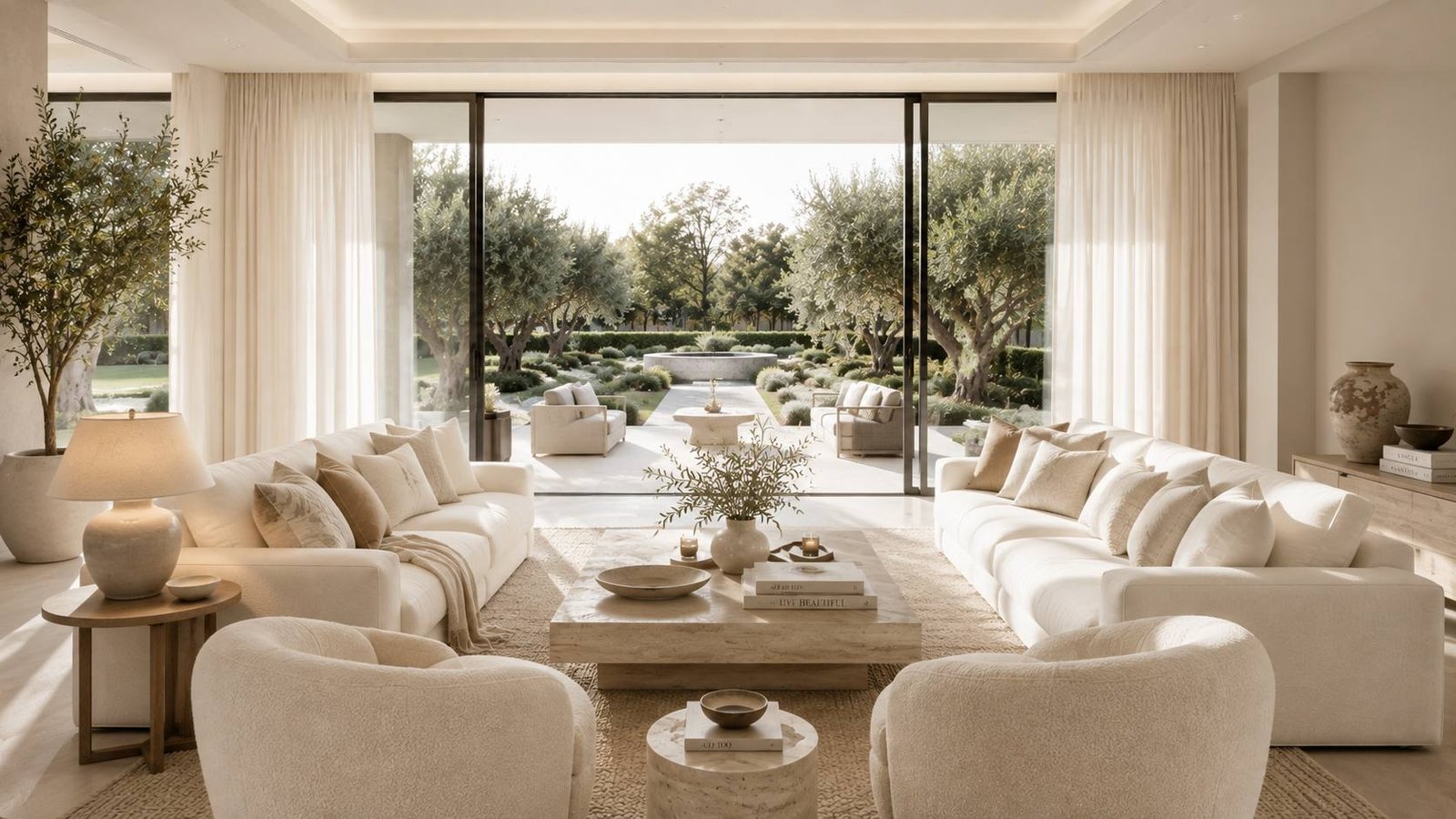
The living room carries more emotional weight than any other space in the home. It is where the day ends, where conversations deepen, and where we finally exhale. Yet many living rooms feel busy, cluttered, or vaguely uncomfortable — not because the furniture is wrong, but because the room was assembled instead of designed.
Peace, in architectural terms, is not an accident. It comes from proportion, light, circulation, and restraint working quietly together. Here are the principles I use when designing living rooms that feel as calm as they look.
Start With How You Want to Feel
Before choosing a sofa or a paint color, decide what the room is for. A living room designed for quiet reading nights asks for different decisions than one designed for entertaining twelve people.
Ask yourself:
- What should the first three seconds in this room feel like?
- Who uses it most — and at what time of day?
- What currently interrupts the calm: cords, clutter, glare, traffic paths?
- What single change would make you use this room more often?
Every decision that follows — layout, color, lighting — should answer to that feeling.
Let the Layout Breathe
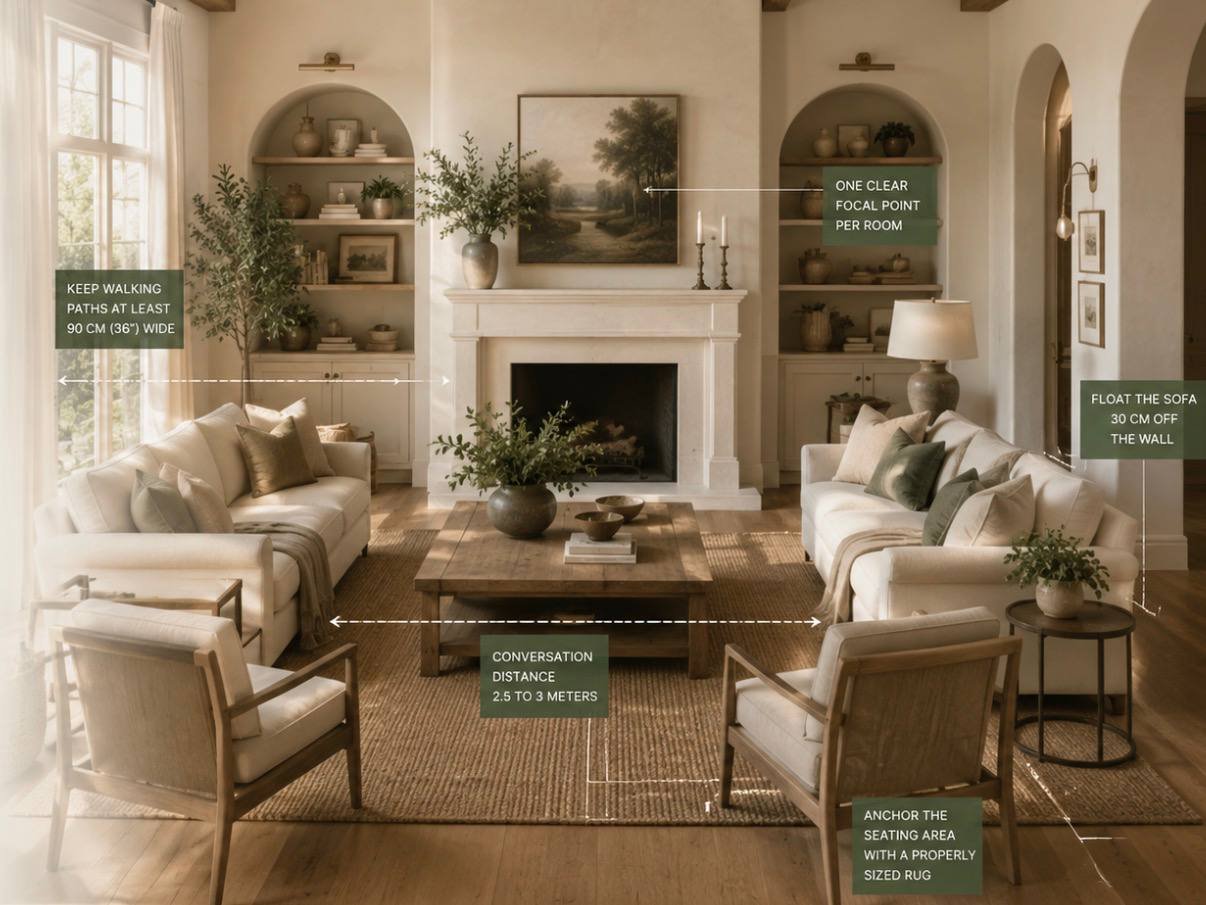
Peaceful rooms have generous circulation. As a rule of thumb, keep main walking paths at least 90 cm (36") wide, and let seating face seating — conversation happens best at 2.5 to 3 meters between sofas or chairs.
Resist pushing every piece against the walls. Floating the sofa, even 30 cm off the wall, instantly makes a room feel considered rather than crowded.
- One clear focal point per room — not three competing ones.
- Anchor the seating area with a rug large enough for front legs on.
- Leave at least one wall — or one corner — visually empty.
Build a Calm Color Foundation
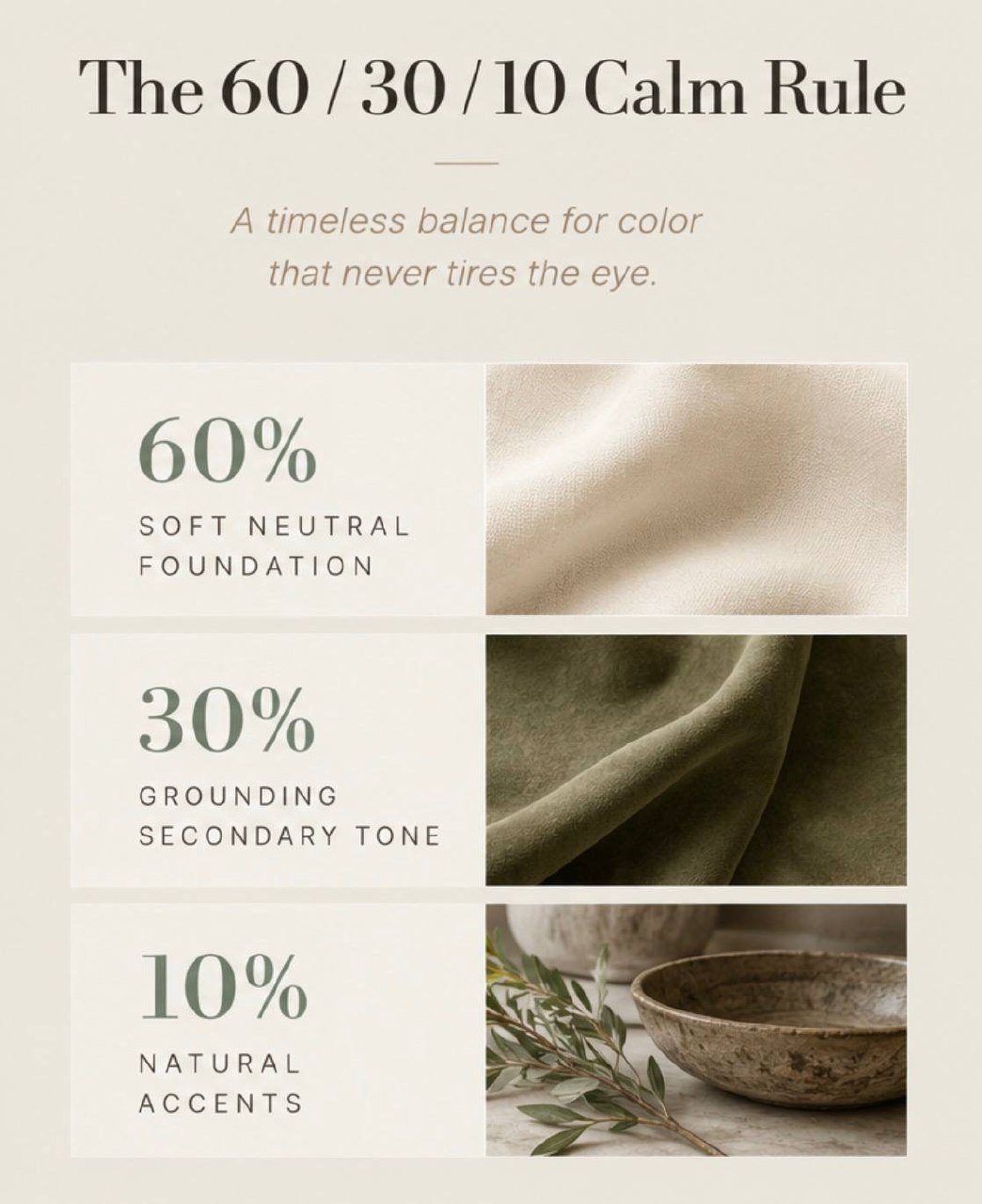
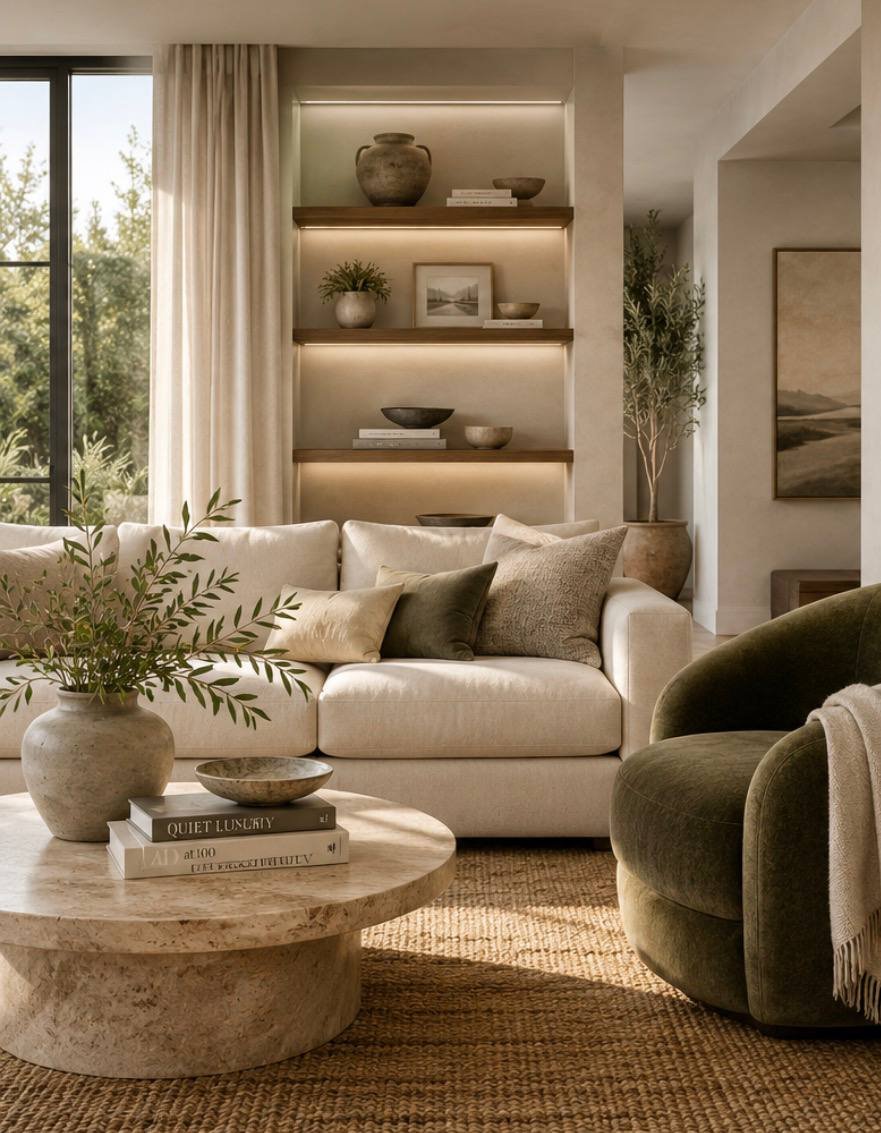
Serene rooms rarely rely on one flat color. They layer close relatives of the same family — ivory, sand, clay, soft taupe — so the eye moves without ever being startled.
Choose your palette in this order:
- Walls and large surfaces: warm whites and soft neutrals.
- Anchor pieces: one or two deeper, grounding tones.
- Accents: muted, natural colors — olive, terracotta, stone.
If a color would feel loud in a bedroom, it will eventually feel loud here too.
Layer Natural Textures
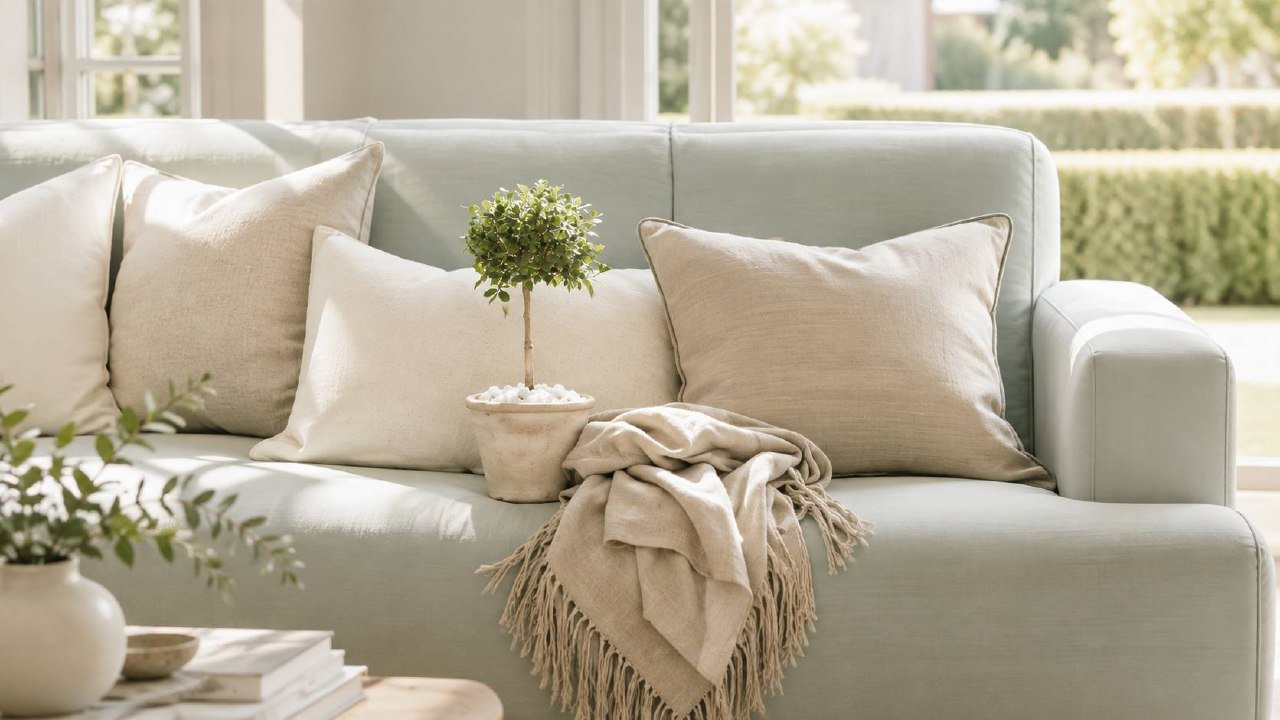
When color stays quiet, texture does the talking. A monochrome room becomes rich — not boring — when linen, wool, wood, stone, and ceramic each catch the light differently.
- Linen slipcovers and washed-cotton cushions.
- A wool or jute rug underfoot.
- One wooden surface with visible grain.
- Stone, ceramic, or unglazed pottery as accents.
- Something living: an olive branch, eucalyptus, fresh flowers.
Create Small Zones With Purpose
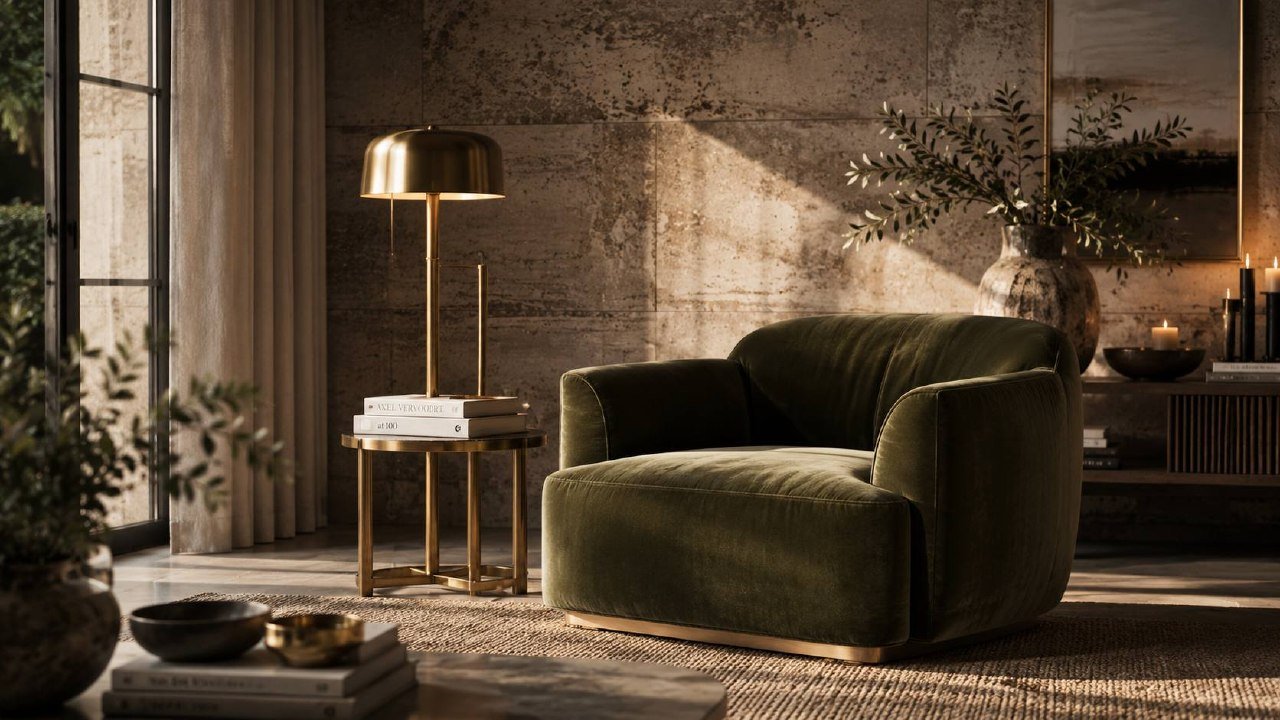
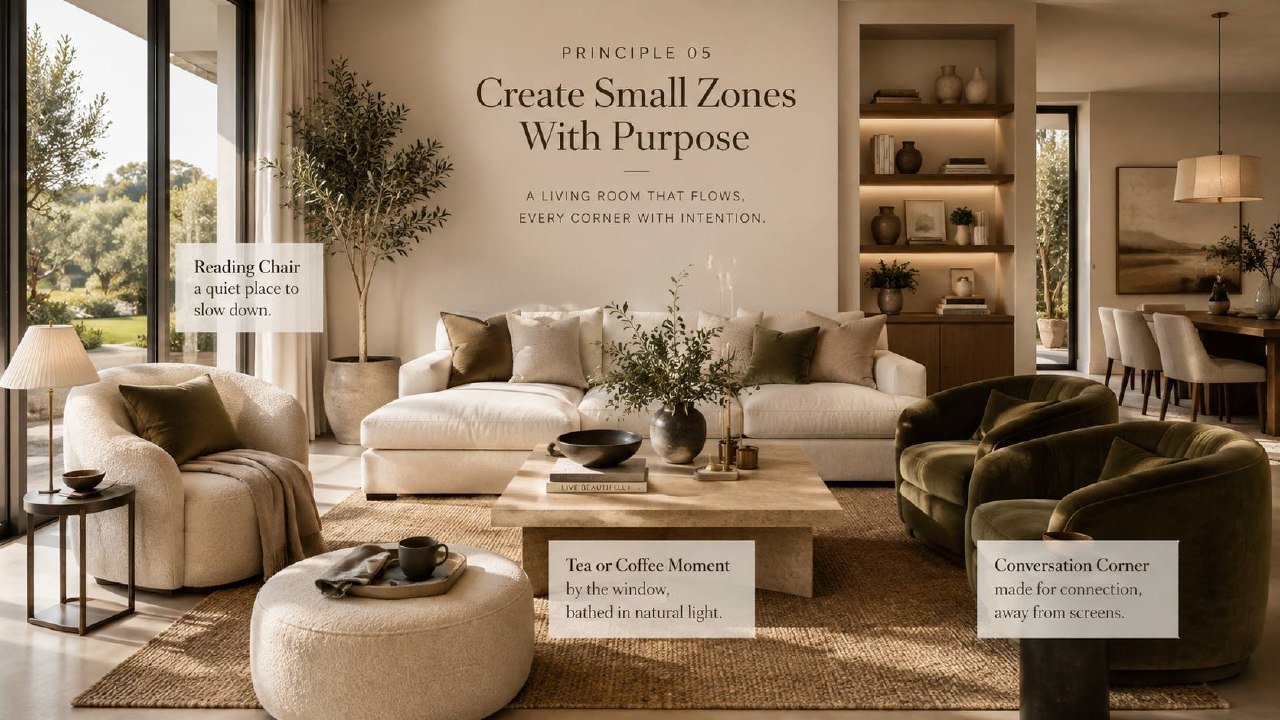
A living room feels peaceful when every corner knows its job. Within one room you can hold several quiet destinations:
- A reading chair with its own lamp and side table.
- A tea or coffee moment near the window.
- A game or conversation corner away from screens.
Zones give the room rhythm — and give people reasons to linger.
“A room feels peaceful when nothing in it asks for attention — and everything in it deserves it.”
Delcie FreyEdit More Than You Add
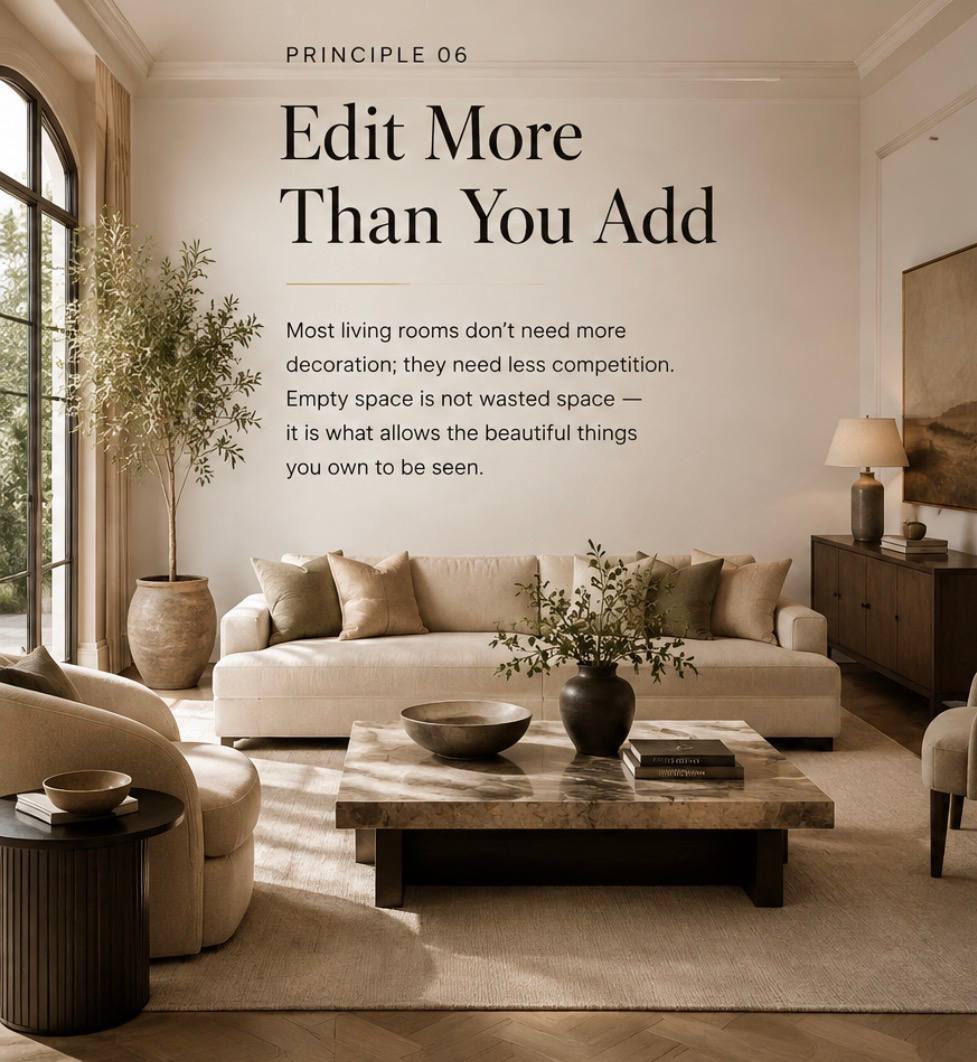
Most living rooms don’t need more decoration; they need less competition. Empty space is not wasted space — it is what allows the beautiful things you own to be seen.
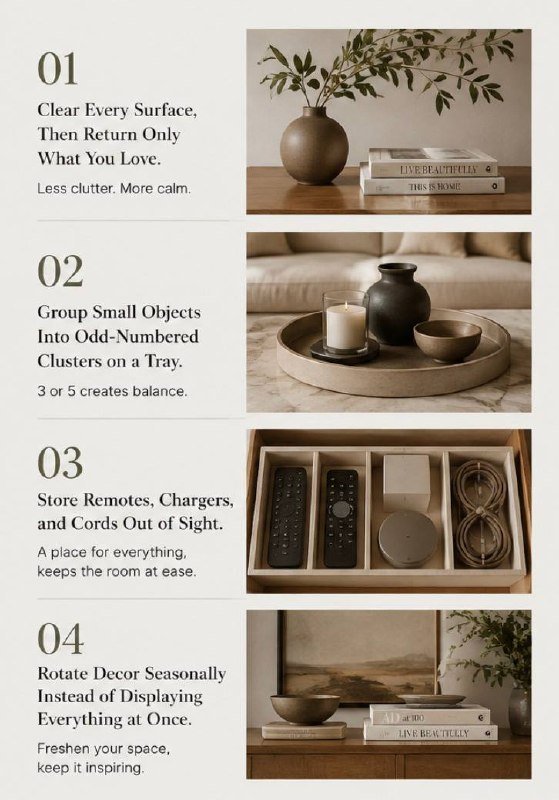
- Clear every surface, then return only what you love.
- Group small objects into odd-numbered clusters on a tray.
- Store remotes, chargers, and cords out of sight.
- Rotate decor seasonally instead of displaying everything at once.
Give the Room One Statement
Serenity doesn’t mean absence of character. The most memorable calm rooms hold exactly one architectural or sculptural gesture: a fireplace, an arched niche, a limewashed wall, an oversized artwork in soft tones.
One statement, fully committed, reads as intention. Three statements read as noise. If your room already has a fireplace or a beautiful window, let it lead — and let everything else support it.
✦ Designer Tips
- Warm white bulbs only (2700K) — and never a bare ceiling light after sunset.
- Choose a rug that extends at least under the front legs of all seating.
- Curtains hung high and wide make ceilings feel taller and light softer.
- Keep at least 30% of every shelf empty.
- One scent, softly present — a candle or diffuser near the entry.
- If it doesn’t serve rest, conversation, or beauty, it belongs in another room.
Final Thoughts
A living room that feels at peace is not the product of a bigger budget — it is the product of clearer intentions. When the layout breathes, the palette whispers, the textures invite touch, and every object has earned its place, the room begins to give something back: ease.
Start with one principle this week. Float the sofa, clear the surfaces, or simply decide how you want the room to feel. Calm is built exactly that way — one intentional choice at a time.